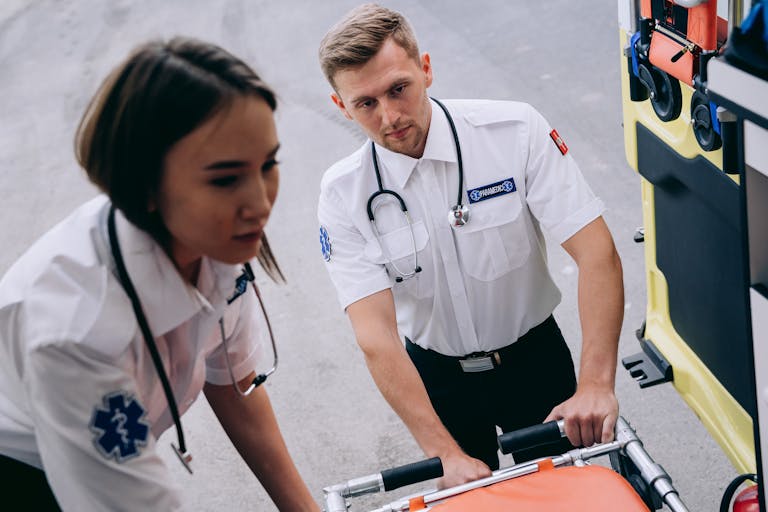
Boost Your Hospital’s Transport Efficiency: Insights from Yuma Regional Medical Center’s Best Practices
When it comes to hospital logistics, patient transport isn’t just about getting from point A to point B. It’s about ensuring safety, efficiency, and a seamless experience for patients, medical personnel, and partnering institutions. If you’ve landed here, you’re likely a hospital or hospice administrator exploring how Yuma Regional Medical Center (YRMC) transport operates—and more importantly, how they do it well. Buckle up, because this guide covers everything from best practices to innovative considerations tied to YRMC’s approach.
Introduction: Building Trust Through Reliable Transport
For any healthcare institution, transport services are the invisible backbone ensuring continuity of care. Yuma Regional Medical Center has excelled in making sure this backbone functions with precision and compassion. With experience handling non-emergency transportation, emergency transfers, and even long-distance medical trips, YRMC demonstrates how intelligent systems support patient care and improve operational efficiency.
But what sets them apart? Let’s dive into their practices and explore how your institution can emulate their success.
Best Practices and Considerations for Yuma Regional Medical Center Transport
1. Prioritizing Non-Emergency Medical Transportation (NEMT)
YRMC’s transport services include highly organized Non-Emergency Medical Transportation (NEMT). They ensure that patients traveling to and from critical medical appointments are handled with care and punctuality. Their NEMT strategy includes:
- Qualified Drivers: Employing trained and licensed drivers who are both compassionate and knowledgeable.
- Cleanliness and Safety Standards: Vehicles are regularly sanitized, reducing the risk of cross-contamination—a necessity for medical partners focused on infection management.
- Person-Centered Assistance: Drivers help patients board and disembark comfortably, which is crucial for elderly or disabled patients.
Takeaway: If your institution is looking to improve transport reliability, employing well-trained personnel and maintaining stringent vehicle protocols should be baseline practices.
2. Emergency Preparedness and Mass Evacuation Protocols
YRMC is prepared for worst-case scenarios, including mass casualty situations or hospital evacuations. Relying on coordination with Medical Operations Coordination Centers (MOCCs) and established patient-tracking systems, YRMC ensures that every patient, even in large-scale emergencies, gets where they need to go safely.
Best Practices:
- Effective patient tracking systems ensure no one is left behind.
- Collaboration with regional, state, and federal agencies improves resource utilization during crises.
Pro Tip for Partners: Ensure your systems for disaster readiness are regularly reviewed and digitized!
3. Facility Design Bolsters Transport Efficiency
Through thoughtful infrastructure updates, YRMC has optimized patient transport within and around its campuses. Highlights include:
- Heliports for Air Transport: Immediate air response for critical cases with two stilted heliports installed.
- Expanded Parking Structures: To ensure easy ground access for ambulances and NEMT vehicles.
- Centralized Radiology and Lab Access: Patients undergoing diagnostic testing or lab work are transported smoothly, minimizing delays.
Insider Note: A medical partner can benefit greatly by matching such logistical foresight, especially through YMT Partnership Services, which YRMC employs for improved coordination.
4. Optimizing Long-Distance Medical Transport
Remote patients needing specialized care often rely on long-distance medical transport to YRMC. Through offerings like private pay options for such trips, the center ensures flexibility, affordability, and comfort for patients traveling significant distances.
Advice for Facility Administrators:
Considering economic diversity among patients, private pay options should be a priority to accommodate variance in transport needs effectively.
5. Comprehensive Emergency Department Integration
With nearly 75,000 patients flowing through YRMC’s Emergency Department annually, transport services are tightly integrated into their operational framework. Value-stream mapping plays a big role here, ensuring unnecessary steps are eliminated for faster, more efficient patient movement.
This reduces:
- ED wait times
- Staff overtime
- Unnecessary delays in care for inbound and outbound transport
Frequently Asked Questions (FAQs)
Q1: How does YRMC address longer-distance transport needs for patients?
YRMC employs long-distance transport solutions, with private pay options available for affordability. These services ensure patient comfort and medical supervision en route.
Q2: Can hospitals partner with YRMC to enhance their own transport networks?
Absolutely. Through YMT Partnership Services, YRMC collaborates with partners to expand transport efficiencies, leveraging their systems and infrastructure for mutual benefit.
Q3: What protocols are in place for emergency evacuation?
YRMC utilizes MOCC coordination, robust tracking systems, and preset protocols to guarantee efficient patient movement during mass casualty incidents or evacuation scenarios.
Conclusion: Why YRMC Transport Could Be Your Gold Standard
In the world of patient transport, Yuma Regional Medical Center proves that excellence lies in the details. From safe and sanitized non-emergency trips to air rescue readiness, YRMC leads with an approach that’s proactive, patient-focused, and scalable.
As a hospital or hospice administrator, leveraging a transport system with YRMC-level precision can significantly uplift your patient care standards. Whether you’re considering YMT Partnership Services for collaboration, adopting private pay models, or just wanting to implement better internal protocols, Yuma’s expertise offers a blueprint for success.
Remember, when it comes to medical transport, the journey matters just as much as the destination. Why not aim for excellence?
About Yuma Medical Transport
Yuma Medical Transport is your trusted partner in reliable, non-emergency transportation services based in Yuma, AZ. We specialize in providing specialized transport solutions—including wheelchair, stretcher, ambulatory, bariatric, hospice, and long-distance services—to healthcare facilities, elder care providers, and private clients. Our commitment is to deliver safety, comfort, and professionalism on every journey.
This guide aimed to provide an in-depth look at Yuma Regional Medical Center’s transport operations and how they set a benchmark in the industry. For more insights and updates, stay connected with Yuma Medical Transport.